Consumer benefits of battery optimisation


In Australia, large-scale batteries area critical pillar in the electricity system providing capacity to store excess low-cost energy, such as solar and wind, and to release it when there are peak demand periods in the electricity market.
To incentivise investment in battery projects, developers must be confident the asset will generate sustained value, and this requires technology. Advanced optimisation platforms use real-time data, automated forecasting, and intelligent bidding to ensure each battery delivers the right amount of energy into the market at the most system-beneficial times.
While large-scale batteries deliver commercial outcomes to developers, they are more importantly providing public benefits.
How batteries are optimised
There are different ways to design how a battery is optimised – from its economic, technical, or system value. Rather than charging or discharging based on fixed schedules or assumptions, optimisation continuously evaluates forecast market conditions, network constraints, asset availability and revenue opportunities across the electricity market.
This includes forecasting when and how a battery will participate in a market while protecting the health of a battery and working within its warranty requirements for discharging and charging.
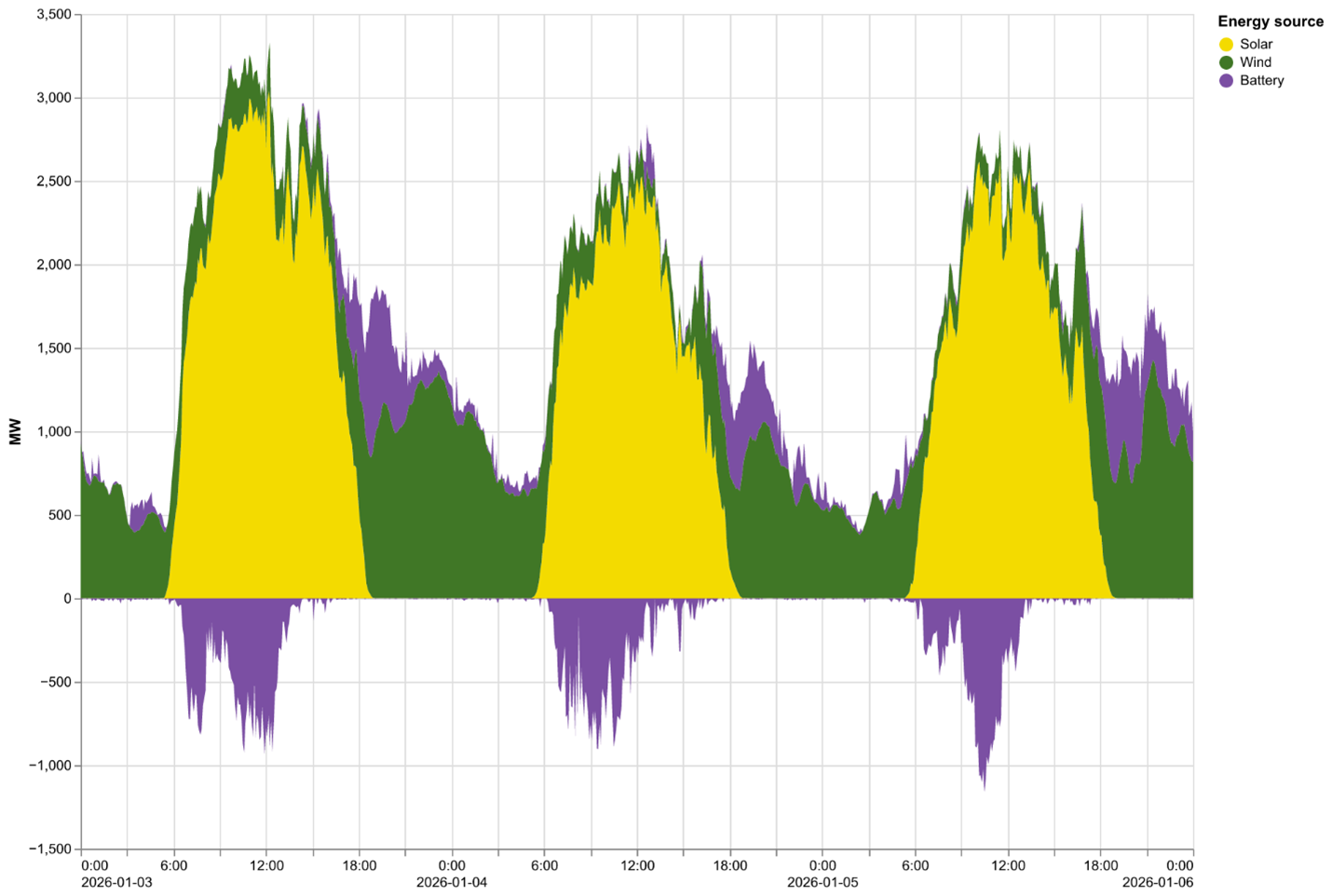
Batteries can be optimised in many different ways. For example, it can provide capacity firming for renewables storing excess solar or wind energy and discharging it when energy demand is at its highest. Batteries can also support the grid with Frequency Control Ancillary Services (FCAS) to stabilise the grid by rapidly charging or discharging. During blackouts or extreme weather conditions which impact the supply of electricity, batteries can support communities through a power outage.
Through an optimisation platform, it identifies how a battery can deliver the best return to an asset owner. Battery optimisation platforms use a combination of machine learning, forecasting, and market data to weather models. It analyses when the best time is to charge or discharge a battery with the safety of the battery in mind.
What’s important to remember is while battery optimisation relies on technology, human oversight remains important to ensure a battery is functioning in a secure and safe manner.
Benefits for energy consumers
For developers like Eku Energy, battery optimisation platforms ensure that projects we finance can deliver on the outcomes required for an asset to be secure and attractive to investors.
Even if battery optimisation may sound like a commercial strategy for developers, its value flows directly to households and businesses. Some of these benefits include:
· Lower system costs: Efficiently dispatched batteries reduce our reliance on expensive gas and diesel peaking.
· Cheaper electricity bills: Increased storage capacity may have a material impact on wholesale prices.
· Improved reliability: Batteries can respond instantly to network events, preventing blackouts.
· Better use of renewables: Optimisation helps store excess solar including residential rooftop solar and wind energy for use that would otherwise be curtailed.
· Greater grid stability: FCAS participation reduces frequency disturbances and protects the grid infrastructure.
· System support: Batteries can provide system strength and allow increased flows on existing transmission infrastructure.
Benefits for project developers
For developers, battery optimisation transforms energy storage from being an engineering asset into a strategic, revenue-generating energy resource. It:
· Increases investor confidence and bankability.
· Maximises long-term returns and payback periods.
· Supports the participation of a battery in different market scenarios.
· Improves the batteries operational efficiency and lifetime performance.
Battery optimisation strengthens Australia’s energy transition by ensuring surplus renewable energy is captured, stored and delivered when it’s needed most.